Disclaimer: Maps are copyrighted. The previews on this page are for informational purposes only. Please respect copyright and always refer to original maps.
All stations on Tokyo's Oedo line (opened in 2000) have been created by different well reputed architects, selected through a design competition [g-mark.org], [makoto-architect.com], [jrtr.net (PDF)]. The organic designs on platform and street levels of Iidabashi station are the world's first examples of computer-generated "evolutionary architecture" as architect Makoto Watanabe describes it in his book (see Reference).
Try the following tour, recommended by residents or metro enthusiasts:
The metro network is huge, clean and rather featureless. The Oedo Line is different because every station has been designed with ambition by different architects. The elevated Yurikamome Waterfront line provides nice views.
Tokyo Subway Museum (Chikatetsu Hakubutsukan). Shows the full story of Tokyo subways in fascinating detail. Since 1986. Address: 6-3-1 Higashi-Kasai, Edogawa-ku, Tokyo 134-0084 (100 m east of Kasai station). At Kasai metro station. Hours (check before visiting): Closed Mondays. Admission: 200 YEN. Features: Museum shop, lecture-hall, rest lounge, library. Reference: chikahaku.jp (in Japanese) (official website). japaneserailwaysociety.com.
The Railway Museum. 30 km north of Tokyo, located in Saitama, this is Japan's leading railway museum and the centerpiece of the JR East 20th Anniversary Memorial Project. The museum preserves both the physical elements and heritage of trams, commuter railways and railways in Japan and abroad. The museum also conducts research and development. Features trains and driving simulators of Shinkansen, Keihin Tohoku Line, Yamanote Line, and others. Since 2007. Address: 3-47, Onari-cho, Omiya-ku, Saitama-city, Saitama, tel. 048-651-0088. At Shinkansen to JR Omiya Station and New Shuttle rubber-tyred people mover to Tetsudo-Hakubutsukan metro station. Hours (check before visiting): 10:00-18:00, closed on Tuesdays. Admission: 1000 Yen. Features: 30 railway cars, train cab simulators, railway model dioramas, cafeteria, museum shop, research room. Reference: railway-museum.jp (official website).
Keio Rail-Land. This small museum is operated by the private railway operator Keio Corporation. The outdoor exhibition area houses five former Keio EMU cars. Keio Rail-Land offers many attractions, including a large-scale ‘experience simulator’ where visitors can operate a train and learn, touch, and experience how railroads work. Since 2000. Address: Hino City, Tokyo Hodokubo 3-36-39, phone: 042-593-3526. At Tama-Dobutsu-Koen (Dobutsuen Line, Tama Monorail) metro station. Hours (check before visiting): 9:30 to 17:30, last entry: 17:00. Closed: Wednesday. Admission: 250 Yen. Features: Simulator, diorama, quiz station, mini train, vehicle exhibition. Reference: keio-rail-land.jp (official website). japan-trip.jp.
Tokyu Train and Bus Museum. Tokyu Corporation (Tokyo Kyuko Dentetsu) operates eight commuter rail lines and buses in the Tokyo area. Located in Kawasaki City, just outside Tokyo, this museum includes life-size train cars and buses as well as miniature trains. Address: Kawasaki City Miyamae-ku Miyazaki 2-10-12, phone +81-44-861-6787. At Miyazakidai Station (Denentoshi line) metro station. Hours (check before visiting): 10:00 to 16:30 except Thursdays. Admission: 200 Yen. Features: Shop, virtual driving simulators, panorama theatre of miniature model trains, interactive educational tour. Reference: tokyu.co.jp (official website). whereintokyo.com, tokyocreative.com.
Asakusa Line (Keikyu train in this soundfile): door chime (rm from ototetsu.jp). Yamanote line: In some stations, hypnotizing little melodies are played before departure (e.g. au or au from issp.u-tokyo.ac.jp). Yamanote announcement (wav by Simon ten Kate).


 Printer-friendly




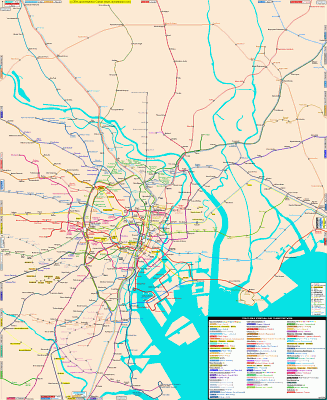

 Tokyo
Tokyo Tokyo Subway Museum (Chikatetsu Hakubutsukan). Shows the full story of Tokyo subways in fascinating detail. Since 1986.
  The Railway Museum. 30 km north of Tokyo, located in Saitama, this is Japan's leading railway museum and the centerpiece of the JR East 20th Anniversary Memorial Project. The museum preserves both the physical elements and heritage of trams, commuter railways and railways in Japan and abroad. The museum also conducts research and development. Features trains and driving simulators of Shinkansen, Keihin Tohoku Line, Yamanote Line, and others. Since 2007.


